What drives the cost of a custom pool
| Cost Factor | Why It Changes the Price |
|---|---|
| Pool size, depth & geometry | More perimeter and surface area mean more excavation, rebar, gunite, tile, finish and plumbing. |
| Site access, slope & limestone | Tight urban access in Nashville or sloped/rocky lots in Williamson County can require rock hammering, retaining walls or specialized hauling. |
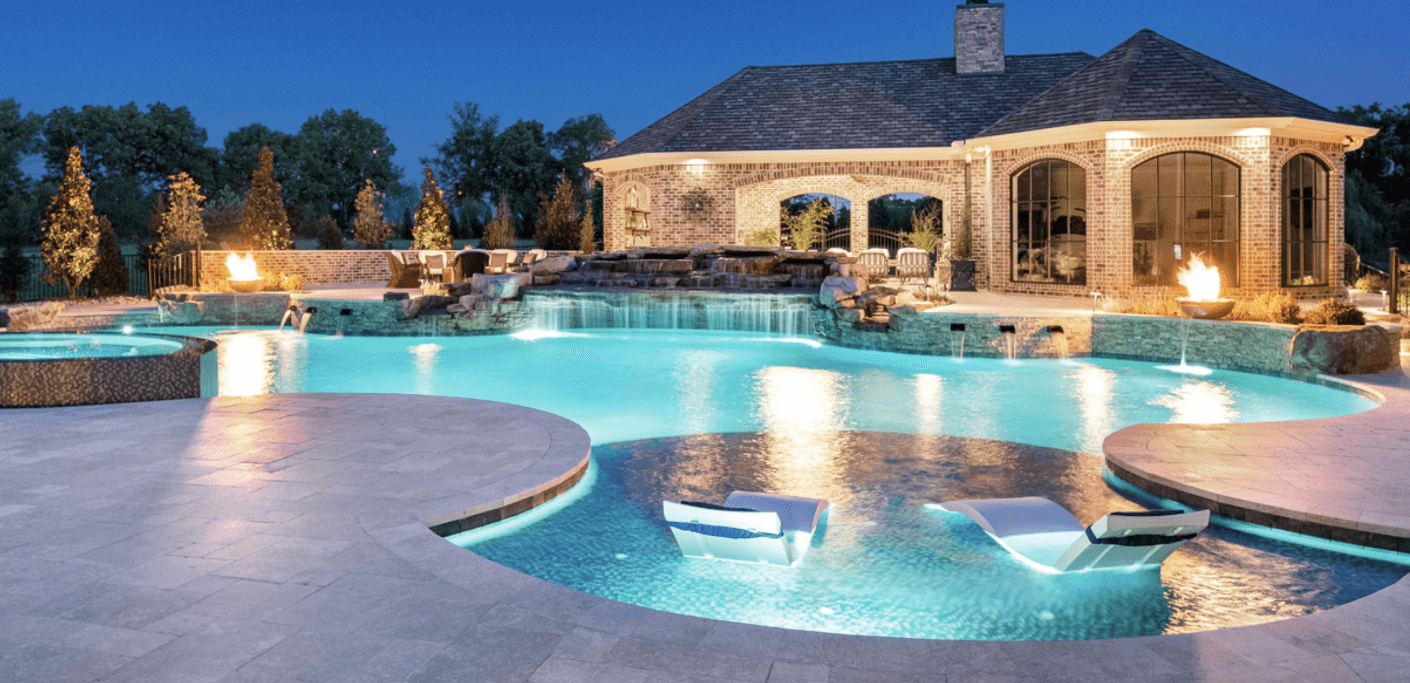
| Integrated spa & features | Adding a raised spillover spa, vanishing edge, natural stone waterfall, grotto or swim-up bar adds structure, hydraulics and masonry. |
| Decking & materials | Travertine, natural stone or porcelain pavers and glass waterline tile cost more than standard finishes. |
| Equipment & automation | Variable-speed pumps, heaters, saltwater or UV/ozone systems, LED lighting and smartphone control vary by package. |
| Outdoor living structures | Pool houses, cabanas, outdoor kitchens, fire pits and fireplaces are scoped as part of the full backyard budget. |
Adding a spa to a custom pool
Building an attached spillover spa at the same time as the pool is almost always more efficient than trying to add one later. Excavation, rebar, gunite, gas/electrical runs and automation are handled in one coordinated build, and the spa shares a single unified control panel and visual aesthetic with the pool.
How to compare pool proposals fairly
- Check what is excluded: rock excavation allowances, utility relocations, electrical hookup, gas line runs, fencing and landscaping are often left out of low-looking quotes.
- Compare structural and equipment details, not just the bottom line: ask about steel layout, plumbing sizing, pump and heater brands, and interior finish type.
- Ask who does the work: confirm whether the builder uses its own crew or subcontracts each phase.
- Ask about permits, HOA review and drainage planning so surprise fees do not appear mid-build.
Frequently Asked Questions
Why do custom gunite pools at Pools By Elio start at $140,000+?
Custom gunite construction involves site-specific design, heavy excavation, steel reinforcement, pneumatic gunite, hydraulic plumbing, artisanal tile and finishes, and modern equipment—executed in-house by our experienced crew rather than cut-rate subcontractors.
Does an initial quote include rock excavation?
Because subsurface limestone cannot always be seen before digging, builders typically address rock excavation transparently in the contract terms after evaluating the property. Always ask how rock is handled before signing.
Do you provide written estimates before I commit?
Yes. After visiting your property and discussing your goals, we provide a clear written proposal covering scope and pricing.